
Finding Austin Resident Records
A good Austin residents directory search keeps the question narrow. Need an address? Start with the county property record and map. A marriage, birth, or death runs through the state or county vital-record route. Court questions belong to the state court portal and Mower Court Administration. Dated household questions fit a directory, newspaper, or archive. These sources overlap. None builds one master list of Austin residents.
Treat any result as a lead, not a verdict. A parcel card shows an assessed owner or a mailing field. It proves nothing about occupancy. A directory entry is dated the day it was printed. A court index describes one case, not a person's whole story. The strongest resident lookup trail keeps the record type, jurisdiction, and access date together.
- Standardize a street address with the official USPS lookup, then compare it with the Mower County parcel map.
- Use the assessor’s Property Details and Property Card to capture the parcel number and tax-record context.
- Check the Recorder’s index for recorded transfers, legal descriptions, and document dates when ownership history matters.
- For a past household, ask Austin Public Library or Mower County Historical Society for the closest city-directory or newspaper year.
- When an online source ends, send a defined request to the correct custodian under Minnesota’s public-data law.
Note: Austin also serves as the Mower County seat, yet a postal Austin address and an Austin city address do not always cover the same ground. Check both geographies when an address looks wrong.
Austin Offices Behind Resident Records
Austin offices split the record trail between them. The Recorder keeps recorded land instruments. The Assessor maintains property assessment information. Election work and local vital-record functions sit with the Auditor-Treasurer. Court Administration is the route for certified local court files, and because these custodians are separate, an Austin search works best when it asks one office for one kind of record.
Mower County Recorder
201 1st St NE, Suite 11
Austin, MN 55912
507-437-9446
Mower County Assessor
201 1st St NE, Suite 10
Austin, MN 55912
507-437-9440
Mower County Elections
201 1st St NE
Austin, MN 55912
507-437-9535
The full address-by-address sequence sits on the Austin street directory page. Custody is the point here. The office that created a record can explain its fields, gaps, and copy rules. No other office will.
Austin's City Clerk is another useful fallback. It handles city licenses and council filings. Legal notices and special assessments fall there too. A defined municipal record also fits. The clerk publishes no general people-search index. County departments handle a parcel, deed, voter, or county vital-record question better. Keeping the request with the right government unit avoids a misleading negative response.
Austin Parcels Before Names
Mower County's property instructions are step-based. Accept the Geospatial Hub disclaimer, then search by PIN, name, or address. Open Property Details, verify the parcel number, and choose the Property Card. The card is an assessment document. It may show a situs address, a displayed owner name, a mailing field, classification, value notices, and property characteristics. Not everyone at an Austin address appears on it.
| Property search field | How Mower County describes it |
|---|---|
| PIN / Parcel ID | Text search; county instructions use parcel number, PIN, and Parcel ID. |
| Name | Text owner/name search; exact matching behavior is not stated. |
| Address | Text search; compare the returned parcel number before opening the card. |
| Property Card | Linked after parcel-number verification and described as a two-page PDF summary. |
The county property view cannot answer every city question. Austin City Clerk records cover a defined filing, license, resolution, or permit-related request instead. The City Clerk's record route shows the official municipal page for those city holdings. Municipal and county files have different custodians.
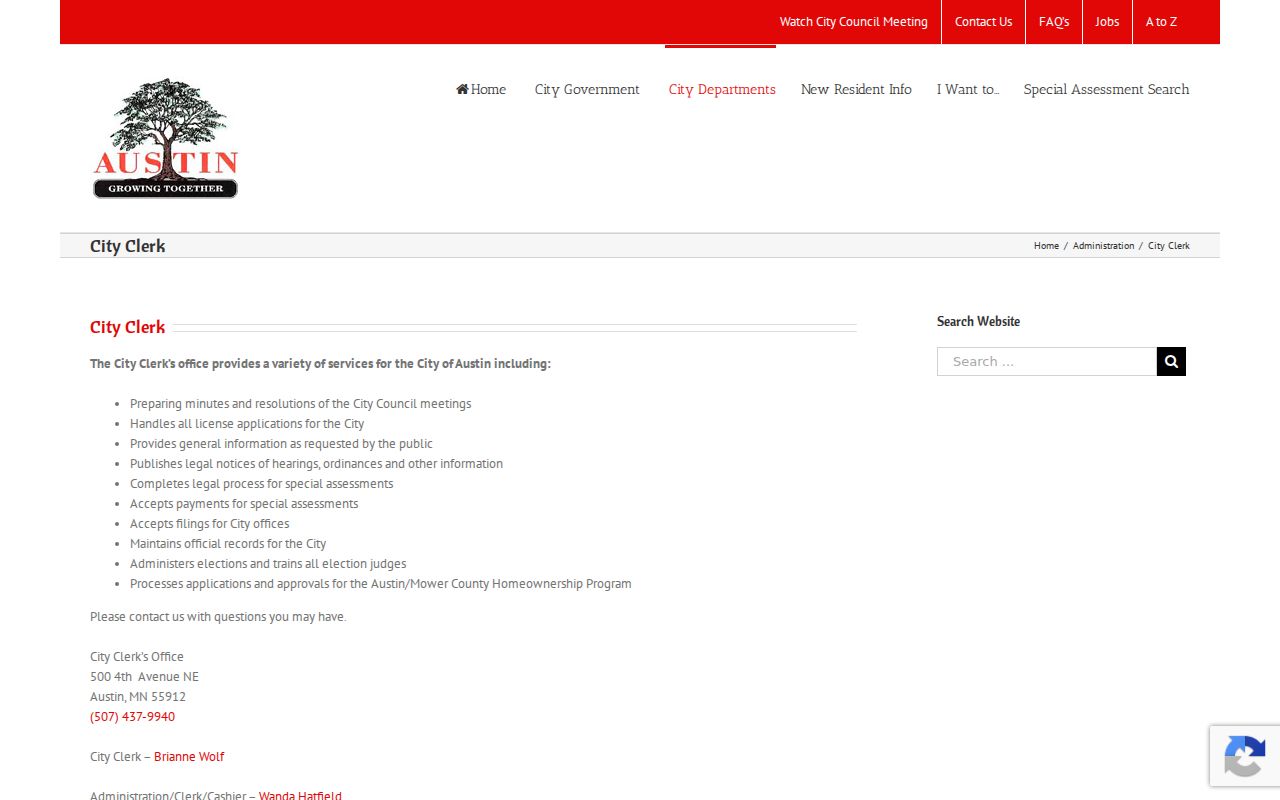
For Austin residents directory research, name the address, record type, and date range. Skip requests for every file tied to a person.
Mower Recorder Coverage Has Two Eras
The Mower County Recorder's RecordEASE service is a strong Austin residents directory clue for deeds, mortgages, liens, plats, and other recorded instruments. Dates matter here. The county page says abstract Grantor/Grantee indexes begin in 1933 and Torrens indexes begin in 1910. The RecordEASE landing notice separately displays images from 1900 and Grantor/Grantee access from 1919. Those notices do not match. Ask which land system, series, and year apply before treating a missing result as a real absence.
RecordEASE requires a login and charges for searches and document views. The Recorder keeps a public computer in the office. That counter route matters. It helps when a login screen hides the field choices or an older series needs staff guidance. A recorded deed proves a transfer date. It does not by itself establish a current resident.
- Parcel
- A county’s numbered unit of land, used to connect a street address with assessment and map records.
- Grantor / grantee
- The party transferring an interest and the party receiving it in a recorded instrument.
- Index
- A finding tool that points to a record; it is not necessarily the record image or a certified copy.
- Criss-cross directory
- A reverse street listing that can connect an address to a dated directory entry.
Note: The Recorder's public-computer option is the practical fallback when authenticated RecordEASE details cannot be inspected online.
Austin Voter Checks Use Addresses
MNVotes is an address-based registration check, not a public Austin residents directory download. The lookup asks for a first and last name plus a ZIP Code or county route, city or township, house number, street, and unit number when one applies. The state says the lookup updates nightly. Local officials may take up to 14 days to process a change. A match confirms a registration workflow. It is not a permanent address history.
Minnesota Statutes section 201.091 governs broader voter-list access. The law treats some registration information as public. A requester must still make the required use affirmation. The public web lookup offers no whole-street search. Protected participants in the Safe at Home program require different handling.
Minnesota's registration tool demands a full address as part of the official process. A name alone is not enough for this Austin check. The address fields are the reason why.
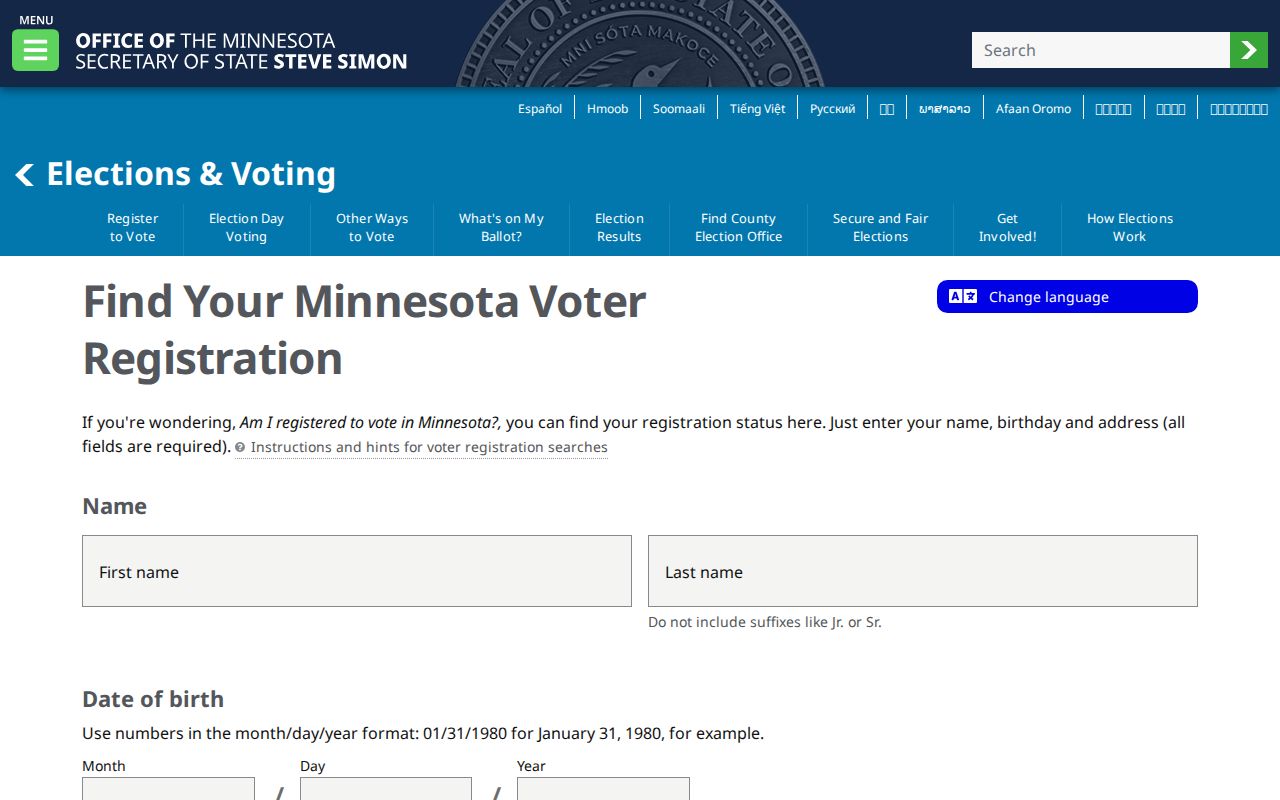
Take any voter result only as far as the election office frames it. Never republish someone's voting history or use a public record to expose a protected address.
Austin Vital Paths Confirm Events
Vital records document events, not current residency. That means they work differently than an Austin residents directory. Two offices split the work in Minnesota. Mower County's local registrar handles part of the birth and death process. The state Department of Health handles the rest. Marriage certificates stay with the county that issued the license. Mower's MOMS coverage reaches back to September 22, 1857. The Minnesota Historical Society People Records Search opens historic birth and death index ranges. A certified copy is a separate step with its own eligibility rules.
Before requesting a Mower marriage record, confirm the issuing county really was Mower. For births, Minnesota Statutes section 144.225 applies. The Department of Health's tangible-interest standard also decides whether a certified copy can be released. Noncertified death records are widely open. Even so, the custodian's current form and payment instructions still control the request. Minnesota's Office of Vital Records explains statewide birth and death access in full.
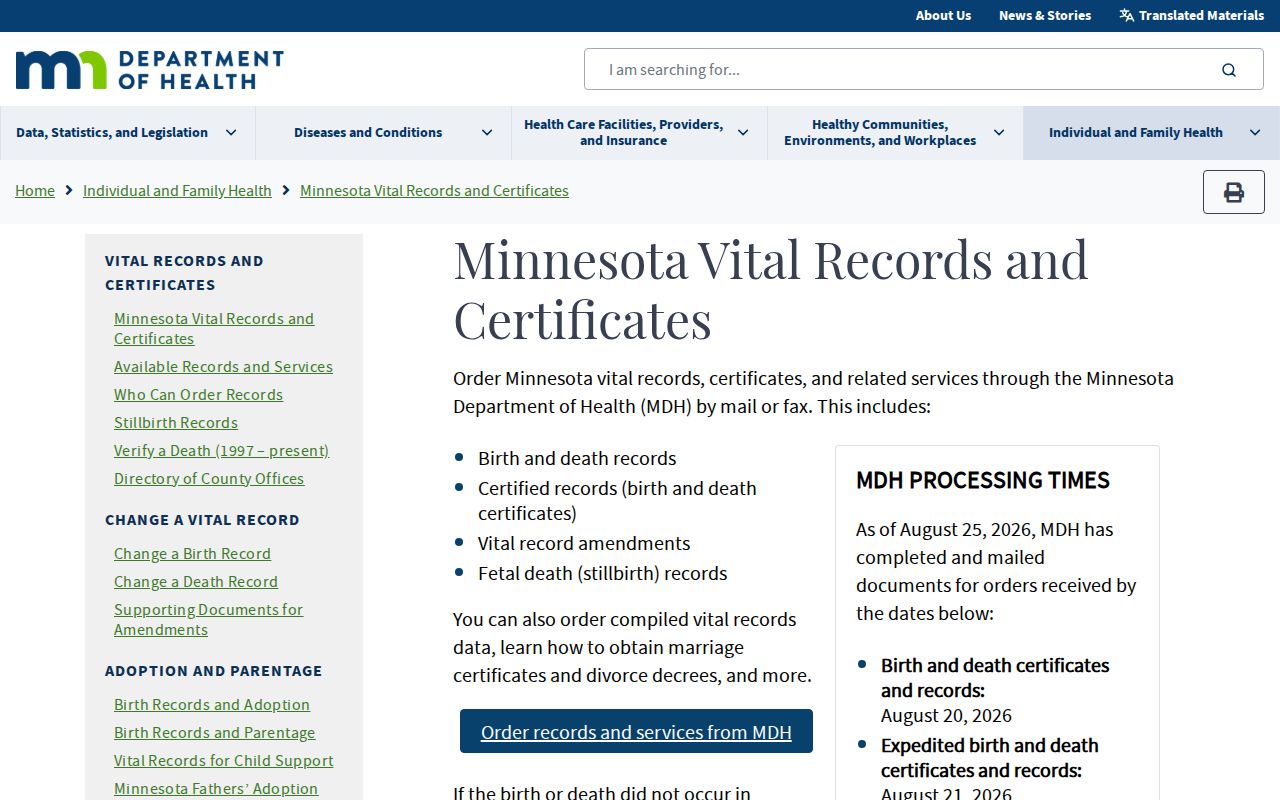
Verify a historical trail with the date, county, and event type a vital source gives. Never stretch an index hit into a claim about where someone lives now.
Austin Court Results Need Context
Minnesota Court Records Online, called MCRO, is the discovery portal for Mower County district court. Name, Case Number, Citation Number, and Attorney searches all work there. A name search can be narrowed several ways. Party type, a sounds-like option, date-of-birth range, filing-date range, case category, case status, and court location each trim the results. Same-name collisions still happen, though. Keep the case number, county, party role, and filing date attached to anything you carry away.
Limits matter here. Protected domestic-abuse and certain child-protection matters, party street addresses, comments, and some pending criminal or traffic cases stay out of view. MCRO issues no certified copies. For certified files, paper records, and anything beyond web access, Mower Court Administration is the local path. Federal court cases live in a separate federal system entirely.
Verify with at least two facts. Match the county, case category, party role, filing date, and case number before tying a result to an Austin person. The portal narrows to Mower nicely, but an index hit is not a certified document. A name that comes up empty does not prove no case exists. Ask Court Administration about a specific file, fee, or access rule instead of guessing at a protected record from a missing result.
Current Austin Resident Sources
Current sources in an Austin residents directory answer different questions. The property view is parcel based, while the election lookup starts from an address. The Recorder's index names parties to instruments. A jail roster reports current custody. The Department of Corrections locator covers a different jurisdiction entirely. Give each source its own date and boundary.
| Austin source | What it can confirm | Custodian | Access boundary |
|---|---|---|---|
| Property Card | Parcel, assessment, and displayed owner or address fields | Mower County Assessor | Public viewer; not an occupancy guarantee. |
| MNVotes | Address-based registration status and districts | Minnesota Secretary of State | Not a whole-street public download. |
| RecordEASE | Recorded transfers, parties, and legal descriptions | Mower County Recorder | Fee/login route or office computer; series differs. |
| MCRO | State district-court case fields where returned | Minnesota courts | Protected material and certification limits apply. |
| MCHS and APL | Dated directory, yearbook, newspaper, and archive clues | Local library and archive | Historical snapshots; item access varies. |
When you need one person rather than a record category, the Austin resident lookup approach pairs two independent details. That is the best guard against a same-name mistake.
Austin Custody Sources Have Borders
The Mower County Jail posts a generated roster of current local custody. It is not a historic database. It is not a general list of Austin residents either. Minnesota DOC's locator covers people under state correctional jurisdiction. Federal custody runs through yet another system. A court docket can help you spot the underlying state case. It cannot replace custody confirmation from the proper office.
Mower County's jail information page displays the current roster. Treat it as a snapshot of the moment. Verify with the jail before relying on any entry.
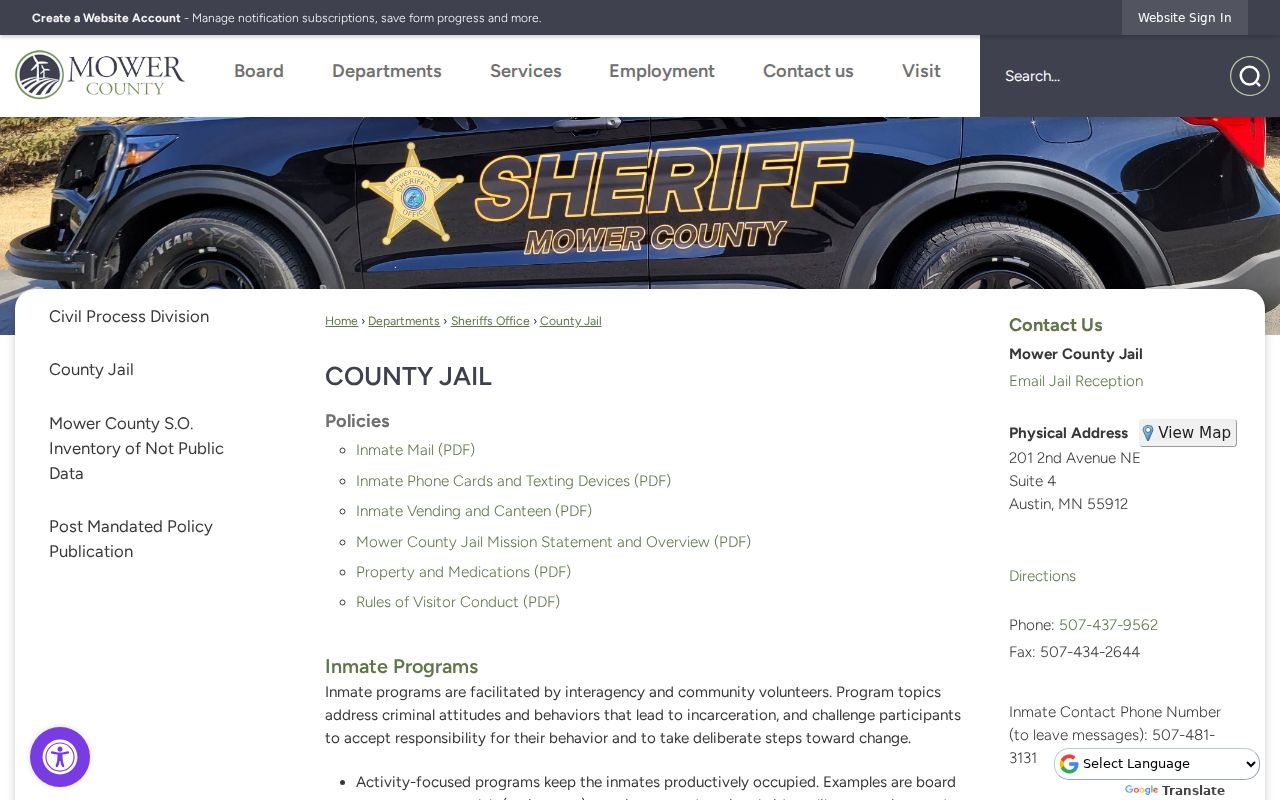
A blank result in one custody source settles nothing about another jurisdiction. Use the local jail, state locator, federal locator, and court record for the separate question each was built to answer.
Austin Requests Under MGDPA
The Minnesota Government Data Practices Act is chiefly governed by Minnesota Statutes section 13.03. It presumes government data are public. Another law can classify them otherwise. A solid Austin request names the government entity and the precise record type. It should also name the person, an address or parcel number, a date range, the preferred format, and whether inspection or copies are wanted. The custodian can supply the data. The custodian can also ask for clarification, report that no data exist, or cite a lawful restriction.
Start with the office that holds the record. The City Clerk keeps city records. The Assessor or Recorder holds county property records. Court Administration manages court files, and the Auditor-Treasurer handles local election and marriage functions. Mower County's Services page links the NextRequest route. Inspection costs nothing under the statute's general rule. Copying and retrieval may carry lawful charges. No request overrides Safe at Home, protected court files, vital-record eligibility, or voter-list conditions.
Austin Privacy Is a Record Limit
A public index is not a license to build a dossier. Minnesota Safe at Home gives qualifying people a substitute address. Their real address never reaches the local elections office. Court and vital systems also keep certain records or fields off the public web. The strongest Austin residents directory practice is to share only what a lawful question actually needs. That means the record type, date, jurisdiction, source, and access limit.
Commercial people-finder sites blend records from mixed dates and sources. That makes them a poor stand-in for the original custodian. For Austin or Minnesota records, go to the office that keeps them.
Austin Directory and Newspaper Shelf
The local shelf for historical Austin residents directory work is deep. FamilySearch catalog metadata lists Austin and Mower volumes spanning 1905 through 1959, with gaps. It also lists Keiter Directory Company editions for 1993 and 1997. Entries include alphabetical private-citizen and business lists, a householders street guide, classified listings, community institutions, and numerical telephone material. Check each volume and publisher before assuming the years form one continuous run.
Mower County Historical Society keeps city directories, plat maps, yearbooks, and Tombstone Trails listings. Its holdings also include vertical files, township microfilm, and newspapers in bound or microfilm form. Austin Public Library connects researchers to genealogy resources and the Austin Daily Herald. The Mower County Mirror dates to 1858, and several local paper titles overlap. That matters when a notice is missing from one of them. The fuller collection and how to read each entry appear on the Austin city directory page.
Local history also sharpens an archive search. Austin's official history points to the Headquarters Building, Oakwood Cemetery, and the Floral Club library origin. It also cites the early Mower County Mirror. Those terms work well for a vertical-file or newspaper query at the Mower County Historical Society. Still, they never replace a dated directory entry or an official record. For every Austin household trail, record the volume year and the page or image number. Record exactly how the source named the person.
Note: A directory entry is a dated clue about the person, address, or role that volume chose to print, not proof of continuous residence.